The world of business is going through a paradigm shift where speed, flexibility and efficiency are not optional but are necessary. Traditional infrastructures are often slow and costly to change and is unable to cope with real-time insight and distributed operations. ScalerPi provides a fresh approach by combining edge computing with practical engineering in order to offer solutions that can truly expand.
At the heart of this change is industrial automation using Raspberry Pi, which enables organizations to consider a new way to build and manage systems. Companies can now make use of light, powerful devices to replace heavy, centrally-located hardware. This technique not only cuts down on delay but also enables teams to be able to react instantly to the changing environment.
Data to Action at the Edge
The most significant benefit of edge computing lies in the ability to process data locally. It is not feasible to wait for cloud-based applications to respond in many industrial settings isn’t practical. ScalerPi tackles this issue by providing the infrastructure to operate on its own yet is able to integrate with broader systems when required.
An essential component of this setup is the industrial Raspberry Pi IOT gateway, which acts as the central connection point between devices and applications. It enables seamless communication across sensors, machines and software platforms, ensuring that data flows securely and efficiently. This allows you to monitor operation in real time, detect issues earlier, and maintain consistent performance across multiple locations.
For the logistics industry and monitoring of environmental conditions, this capability is transformative. Systems can operate even in low connectivity or remote zones, making sure that operations remain uninterrupted and data remains accessible.
Compact Power for Demanding Environments
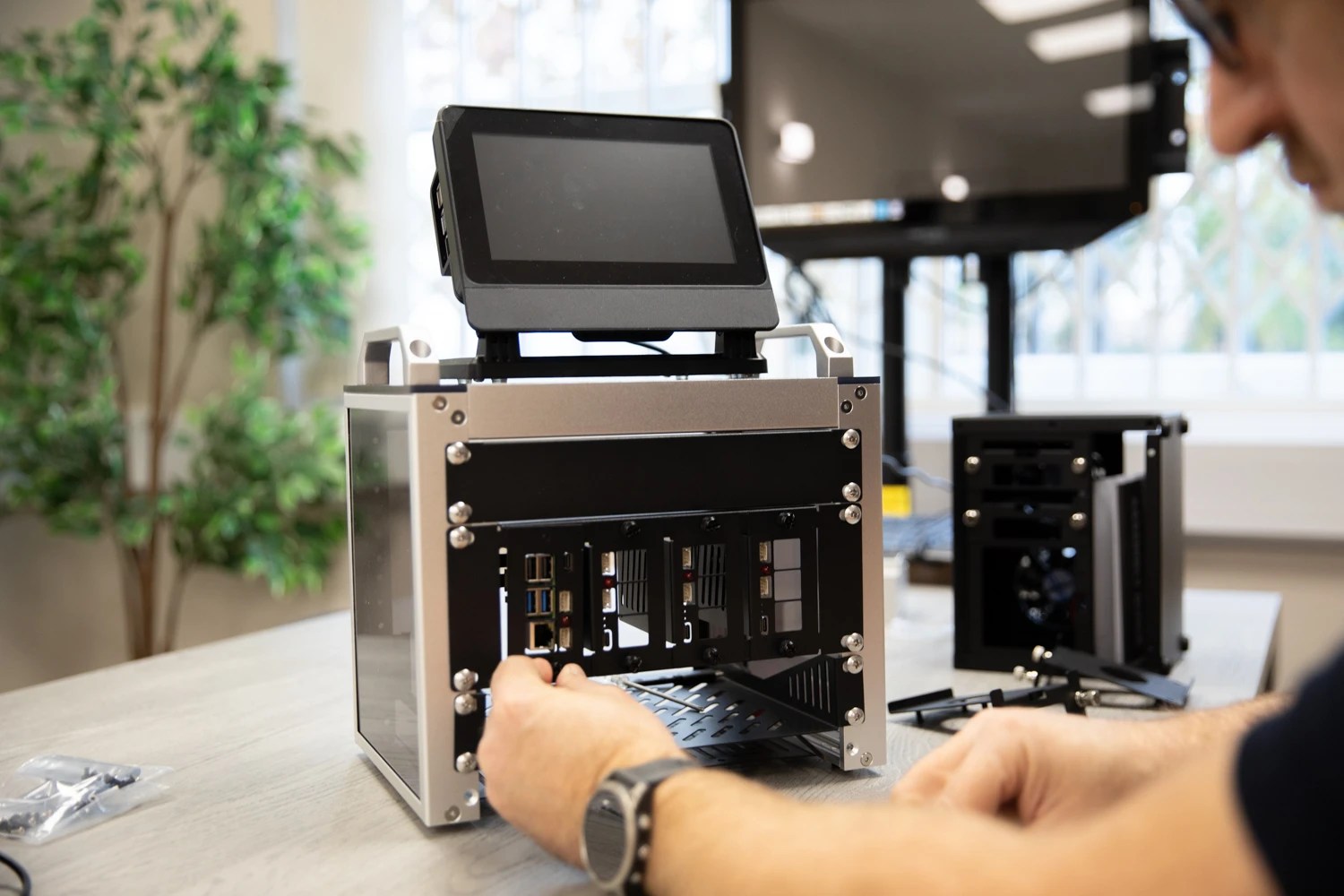
The main challenge for industrial computing is to balance effectiveness and efficiency. While big servers are a great source of power, they’re often costly, consume lots of energy, and are limited flexibility. ScalerPi offers industrial Raspberry Pi servers which deliver reliable computing with a compact and energy-efficient design.
These servers are built for use in real-world situations where there is a limited amount of space and power. They can be employed in a manufacturing facility or retail outlet as well as remote monitoring stations. Their modularity allows for gradual expansion, allowing businesses to align growth with their current requirements.
The tiny industrial Raspberry Pi module server takes this concept one step further and offers greater versatility. The servers are designed to withstand harsh conditions and offer advanced processing along with the durability. These servers are best suited for applications that require continuous operation such as smart cities, or industrial automation systems.
Flexible deployment through containerized delivery
Modern infrastructures must be flexible, and containerization can help. ScalerPi integrates industrial Raspberry Pi docker environments, enabling an efficient and flexible management of applications. With Docker companies can install updates, upgrade, and scale applications quickly without disrupting ongoing operations.
This approach simplifies the development process and guarantees consistency between different deployments. This lets applications be tested at one location and seamlessly transferred to another. This lowers the possibility of errors and improves overall reliability. If you manage several sites, this kind of control is essential.
Containerization helps in the process of innovation. Teams can try out and test new features without affecting existing systems.
Practical Solutions to Multiple Sectors
ScalerPi is an extremely powerful tool as it is able to adapt to a broad range of industries. Industrial automation using Raspberry Pi can be utilized to increase productivity and decrease production time. The machines are able to share and communicate data to create a connected and intelligent environment.
In the agricultural sector, edge-based technology can help farmers adopt smarter methods of farming. Sensors monitor the weather patterns, soil conditions and the health of crops. This helps farmers make informed decisions that will increase yields while conserving resources.
Retail and hospitality are able to benefit from information about the behavior of customers in real-time. Businesses can improve customer experiences through optimizing their business processes. This can include digital signage, as well as queue management. Additionally, public sector projects which include smart cities rely on edge infrastructure for tasks like monitoring environmental quality and asset tracking.
With Trust, Bridge Hardware and Cloud
ScalerPi stands out for its ability to bridge physical devices, and cloud-based system. Through combining hands-on expertise in hardware with modern cloud practices, it creates a unified platform that can handle both local processing and centralized management.
This method ensures that companies can grow without difficulty. The infrastructure is cost-effective, manageable and secure whether you begin with a smaller deployment, or scale up to thousands of devices. The transparent pricing system and modular design further simplify the process and allow organizations to concentrate on developing new ideas rather than addressing operational issues.
A Future-Ready Approach to Industrial Technology
As the development of industries continues and evolve, the need for a reliable and flexible infrastructure will grow. ScalerPi can be a solution which can meet these requirements by combining power of the edge together with Raspberry Pi technology.
Each component of the system, from industrial Raspberry Pi servers to advanced IoT gateways and containerized applications is designed to ensure the ability to scale and be usable. The infrastructure is designed to not only support today’s requirements, but make sure that businesses are prepared for the future.